
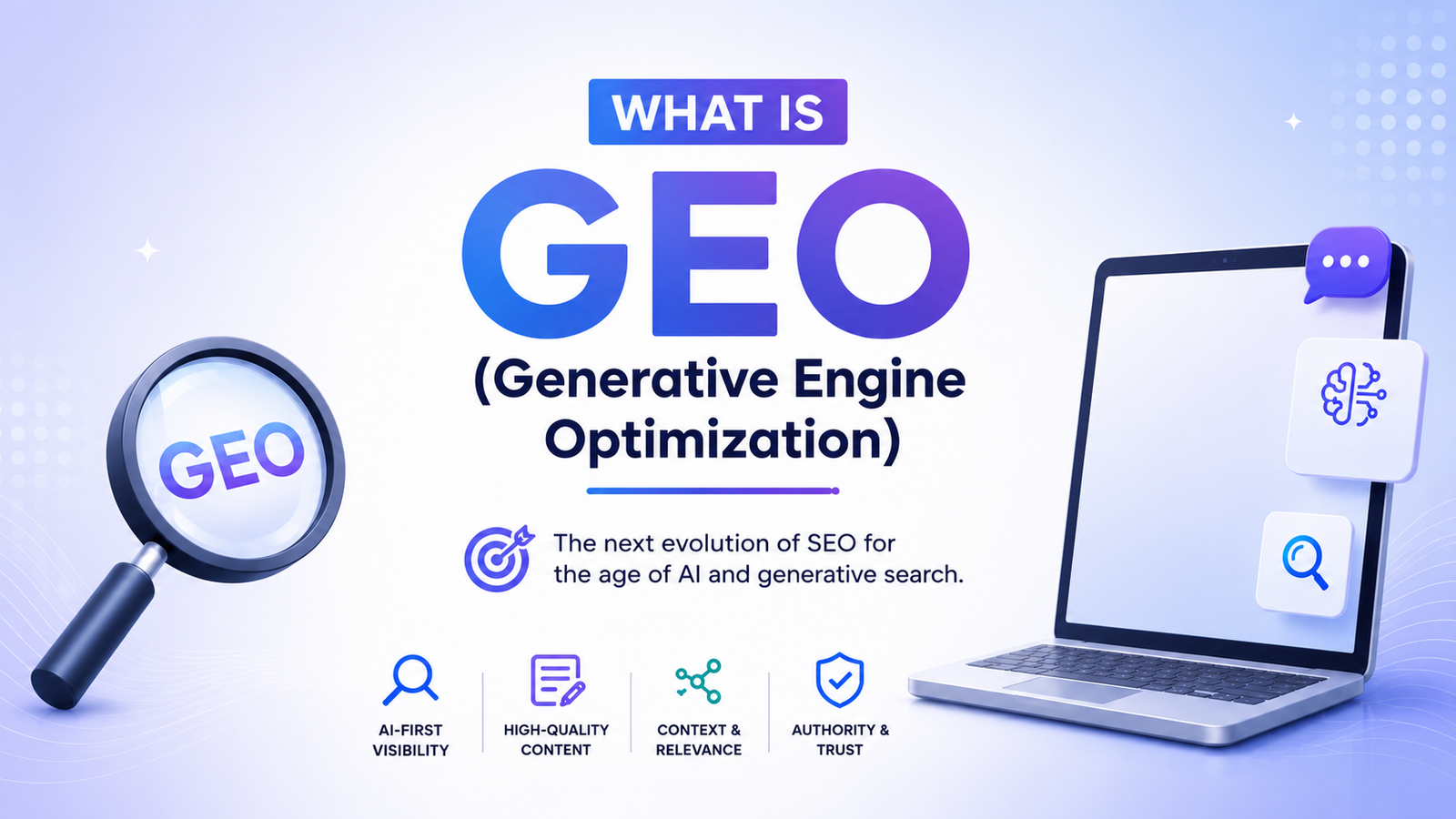
How people find information on the internet is changing very fast. Besides normal search engines, other sources have come up, like AI-powered platforms and generative search tools whose usage keeps rising day by day. This change has brought about a completely different concept called Generative Engine Optimisation (GEO).
GEO involves crafting content in such a way that AI systems find it easy to understand, process, and refer to it when making user responses. Traditional SEO mostly targets elevating positions on search engine results pages, whereas GEO targets ramping up the exposure of a piece of content through AI-generated answers. Since AI-based forms of search are expanding so rapidly, knowing about GEO is no longer a luxury but a must for businesses, marketers, publishers, and content creators to stay visible and competitive online. Read on to learn a lot about GEO in the current world.
Introduction To GEO
Generative Engine Optimisation (GEO) is a new way of optimising content that revolves around the needs of AI-powered search platforms and content-generating tools. The shift towards users relying on AI for getting answers is making it even more important for businesses and content creators to present their pieces so that these systems can easily understand and reference.
GEO is about writing in a very clear, precise, and logical way so that AI will have no issue in understanding and using content pieces in its output. A very important aspect of such content is proper setting it up for AI to take it in and without any issues constructed in the form of a response to a user query.
The main difference from traditional SEO methods is that GEO aims to be mentioned in AI-generated answers.
Read More: Difference Between GEO and SEO
