

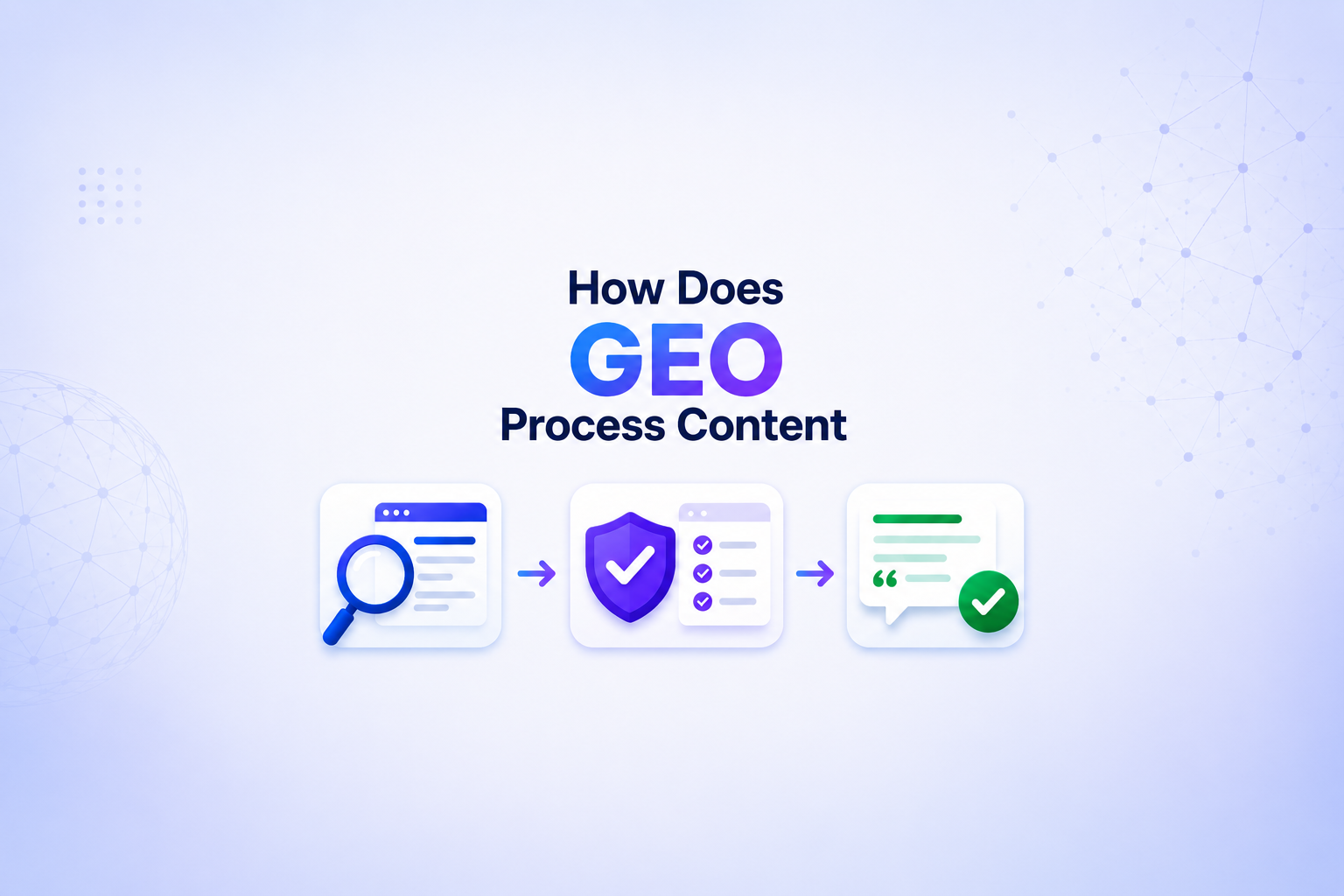
Generative Engine Optimisation can only be understood by first understanding the way AI-powered search engines locate, assess and utilise the content. In fact, while every AI platform has its own technologies and ways of ranking, most generative search systems follow a similar process of selecting information for their responses.
The Retrieval-Augmented Generation (RAG) Process
From my observation, most AI search engines rely on a system called Retrieval-Augmented Generation (RAG). The mechanism in question is basically two steps.
In the first step, the retrieval level, AI digs through its index, or other available sources, to find the content that is relevant to the user’s query. Next comes the synthesis level, where the language model examines the gathered data, creating a full response and figuring out which references are credible enough to cite.
Content Must Be Retrievable
Initially, AI has to identify the content before it can make use of it. For that, websites must have well-organized content, extensive topic coverage, good indexing, and be technically accessible. If content is difficult to crawl or poorly structured, it may never even reach the retrieval phase.
Correctly optimized content will increase your likelihood of making it into the set of data that AI systems use when generating responses.
Content Must Be Citable
Simply finding content is step one. AI engines actually step into evaluating how reliable, relevant, and helpful the content is for the answer. Most frequently cited content comprises those that provide information, explanations, and reliable details.
GEO places significant importance on generating content that not only educates the audience but is also very clear to AI systems.
Content Structure Improves Extractability
The AI systems usually take out certain parts of the articles rather than the whole. Pieces with obvious headings, brief descriptions, ordered lists, comparison tables, questions and answers are the easiest for the AI to process.
If an article is very well organised, the AI can very fast pinpoint the needed data and incorporate it into the generated responses.
Factual Information and Supporting Data
Generally, AI systems lean towards content that has supporting facts, statistics, and other pieces of verifiable information. Usually, articles that present the results of studies, provide industry figures, share the views of experts, and make references to credible sources are considered more reliable than those based only on opinions.
Using accurate data not only enhances the quality of the content but also raises the chances that it will be cited by AI.
Fresh Content Gains More Attention
The issue of content freshness is really gaining traction in AI-powered search. New research indicates that AI engines often give a preference to recent data, especially for subjects that are changing fast. Refreshed write-ups, latest figures, and up-to-date points of view are far more likely to be picked by AI compared to old content.
Keeping your content up-to-date is one of the best ways to not only stay relevant but also to get a better ranking on the various AI-based platforms.
E-E-A-T Remains Important
Experience, Expertise, Authoritativeness, and Trustworthiness (E-E-A-T) still hold a great importance when evaluating content. AI algorithms search for indicators that confirm the genuine expertise and reliability of the content creators.
Usually, content written by expert authors and released through well-known websites is more likely to get cited than content that has low authority signals.
Semantic Completeness
Instead of focusing on specific keywords, AI systems tend to favour content that explains the subject very well. Effective GEO content offers answers to a lot of WH questions of a topic.
If an article provides a full background and also addresses several related questions, AI systems can refer to it with greater confidence when producing answers. For this reason, extensive subject coverage remains one of the key factors for a fruitful GEO plan.
Also Read:
